
Pollinator abundance increased in a young Miyawaki forest.
Sustainable Agriculture Student Research Project
Insect diversity in a new Miyawaki Forest plantingRue Badanic, Department of Sustainable Agriculture and Food Systems, 2025 |
Introduction - Miyawaki Forests
- Insect diversity is falling worldwide, with habitat loss being a major factor
- Miyawaki forests (“mini forests”) are dense plantings of native shrubs, trees, and forbs in deeply amended soil
- They grow quickly and provide complex habitat for birds and insects in a relatively small space within urban environments
- Garden City Conservation Society has started planting Miyawaki Forests in Richmond, BC
- Garden City Miyawaki Forest planted in Fall 2024
Objective
- Establish baseline data, investigating effect of newly planted Miyawaki forest on insect abundance and diversity
- Create monitoring protocols to be repeated by Garden City Conservation Society citizen scientist in future years
Methods
- Systematic pollinator monitoring conducted from May-September 2025 using Xerces Society Method, recording insects interacting with flowers
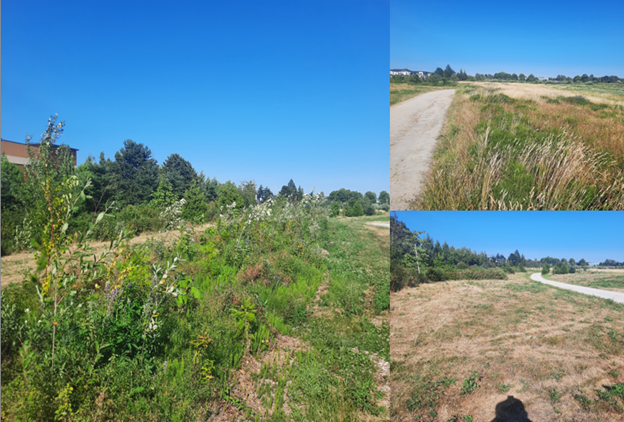
- Two sites at Garden City Lands (Fig. 1):
- Treatment: Miyawaki forest (n=2)
- Control: Lawn (Miyawaki forest was planted over former lawn) (n=2)
- Two sites at Garden City Lands (Fig. 1):
- Pitfall trapping and soil arthropod extractions with Berlese funnels also conducted at both sites, results pending analysis
Image
Results
- Pollinator taxa could not be classified precisely enough to calculate diversity indices
- Pollinator abundance was comparable in lawn and forest plots until lawn was mowed, after which forest pollinator abundance was greater (Fig. 2A)
- Forest pollinator diversity was probably higher quality, as only two types of beetle made up approximately half of lawn pollinators (Fig. 2B)
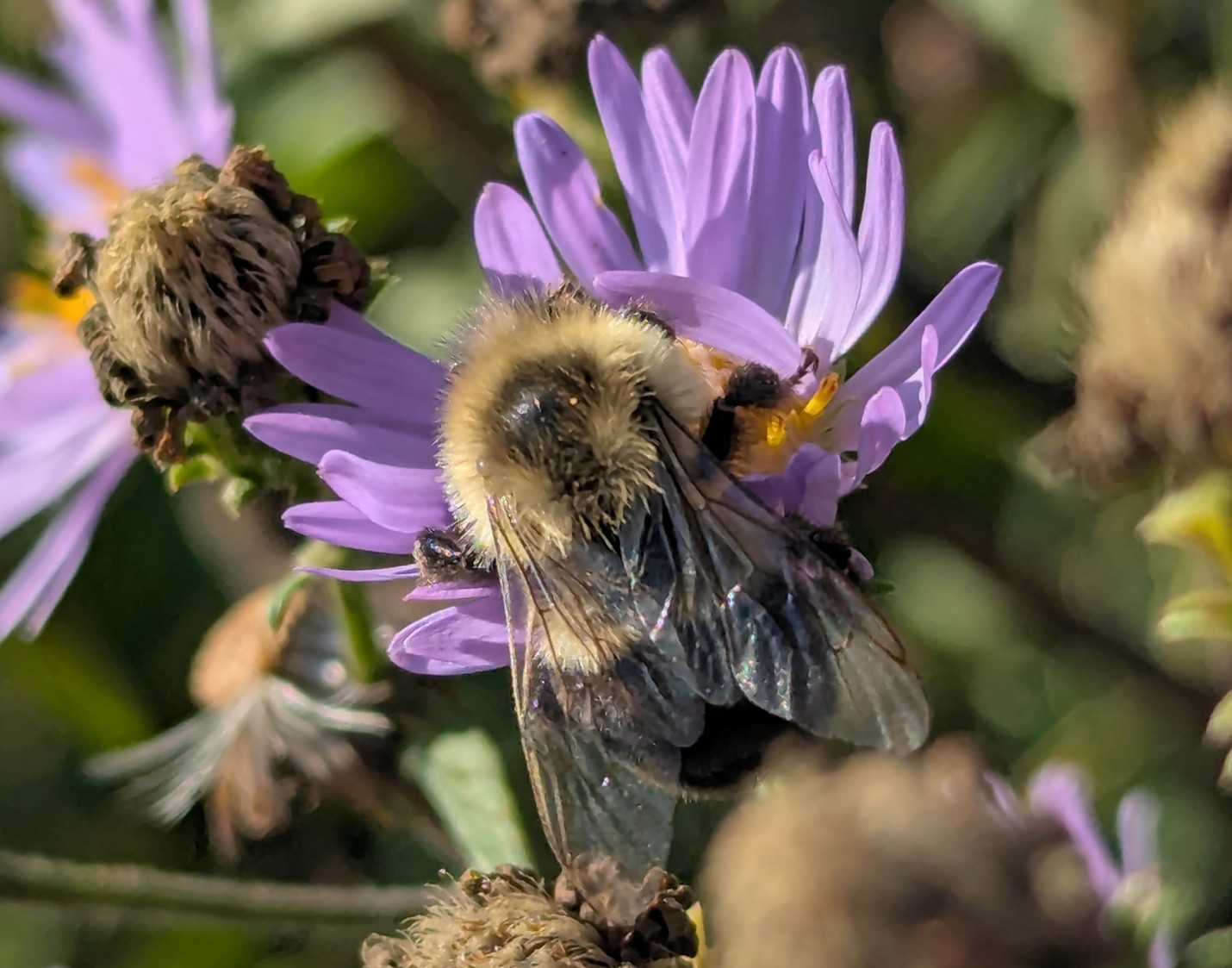
- Species level Bombus (bumblebee) data were not collected, but invasive Eastern Bumblebee (Bombus impatiens) seemed very abundant, particularly towards the end of the season where it comprised nearly all bees observed (Fig. 4)
- Future monitoring should differentiate this species from other Bombus spp.
- Future monitoring should differentiate this species from other Bombus spp.
Image

Image

Image

Image

Image
Acknowledgments
Thanks to:
- The Garden City Conservation Society for project conception and for advocating for GCLPB preservation
- The City of Richmond for GCLPB maintenance, conservation, and for approving this experiment
Image

|  |