A Canadian first is putting cutting-edge science to work for farmers, food producers and the future of agriculture.
Kwantlen Polytechnic University (KPU)’s Applied Genomics Centre (AGC) has been designated a Technology Access Centre (TAC) by the Natural Sciences and Engineering Research Council of Canada (NSERC). The designation was part of an NSERC-managed College and Community Innovation funding package announced today (July 9) by Mélanie Joly, the federal Minister of Industry. The AGC is the only TAC in Canada dedicated to genomics — the study of DNA — and the first TAC to focus specifically on applied genomic services for the agriculture sector.
“From climate change to supply chain disruptions, food producers need tools that help them adapt and thrive,” says KPU President and Vice-Chancellor Dr. Alan Davis. “KPU is proud to serve as a catalyst for innovation, sustainability and economic development in Canada, particularly as the country looks to enhance domestic food production.”
This recognition affirms the AGC’s distinctive role in connecting advanced genomic science with practical solutions for producers, breeders and agri-tech innovators. Unlike traditional academic research centres, the AGC-TAC offers agile, hands-on research and development support, particularly for small or medium-sized enterprises lacking access to specialized scientific expertise.
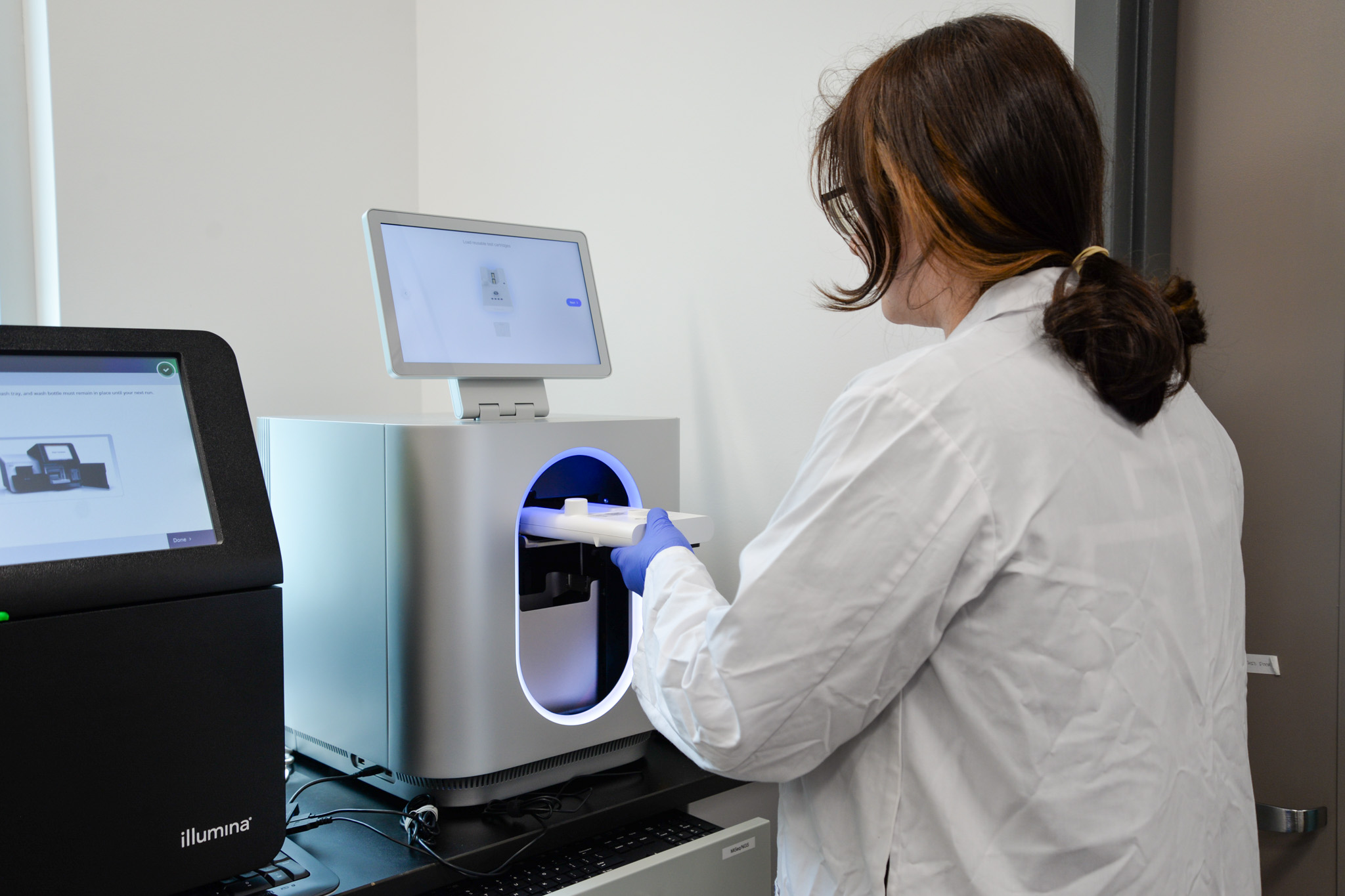
“When producers use genomics to manage disease, they can raise healthier livestock and grow stronger crops — leading to higher yields and better financial stability,” says AGC director Dr. Paul Adams. “Genomics helps us detect pathogens, guide breeding decisions and ensure product consistency.”
Backed by NSERC’s renewable five-year funding model, along with support from KPU and industry partners, the AGC-TAC is positioned to drive agricultural innovation through at least 2030.
“This designation provides long-term, renewable funding,” says Adams. “With expanded networks and financial security, we can do more of what we do best — delivering research, development and innovation services to companies that would otherwise not have access to this type of technology.”
Since its inception in 2019, the AGC has served more than 60 partners, including producers, government agencies, First Nations and agri-tech firms.
“Achieving Technology Access Centre status is a testament to the impact that the AGC has had on Canada’s agriculture sector in just a few years,” says Deepak Gupta, Associate Vice–President of Research and Innovation at KPU. “The growing co-investments from AGC’s research beneficiaries — across Canada’s industry, government, and non-profit sectors — reflects the excellent work of the centre’s faculty, staff and students.”
In keeping with KPU’s polytechnic mission, the AGC-TAC provides practical, hands-on training to undergraduate students in the School of Horticulture and Bachelor of Science in Biology program. Each year, an average of 15 students work at the AGC, participating in industry-linked research projects and gaining valuable experience that prepares them for careers in science, innovation and agri-tech.
One of the AGC’s industry partners is Boviteq, a Quebec company specializing in developing and implementing reproductive and genetic biotechnology for Canadian cattle farmers. Their collaboration is helping to enhance Boviteq’s in vitro fertilization platform, which is now available across three different continents.
“The AGC's approach, from project co-creation with clients to high-quality laboratory implementation and detailed reporting, represents a level of expertise and collaboration that we had not encountered before,” says Dr. Rémi Labrecque, Boviteq’s Director Embryo Research. “We are very confident that the AGC-TAC will be instrumental in delivering relevant research services to support Canada’s bovine industry, as well as other key agricultural sectors.”
Another AGC industry partner is Abbotsford-based WestGen, a farmer-owned company that increases performance and profitability for dairy and beef farmers across Western Canada by providing genetics and reproduction solutions, as well as access to experts in a range of specialties.
“We have worked on four innovative research projects with the AGC,” says Chris Parry, Chief Executive Officer of WestGen. “We created new products, improved farm practices and developed genetic tests for pathogens impacting dairy production in Western Canada. The focus of AGC specifically on applied research in agriculture is truly unique for the region and a valued asset for WestGen and our partners.”
AGC researchers have also partnered with the kʷikʷəƛəm (Kwikwetlem) First Nation in assessing water quality, tracking ecosystem indicators, and monitoring salmon populations along the Coquitlam and Pitt Rivers. Francesca Fogliata, Environment and Stewardship Manager at kʷikʷəƛəm First Nation, says this work supports conservation efforts and deepens understanding of the species that rely on these rivers.
“Working with the KPU AGC team has allowed for meaningful collaboration between our experts and the genomics and metabolomics researchers,” says Fogliata. “We’ve been actively involved in every stage of project development, with regular meetings and consultations. This hands-on approach contrasts with previous experiences working with large universities, where the model was more detached and less collaborative.”
B.C. Minister of Agriculture and Food, Lana Popham, says innovation is essential for strengthening the province’s food security and economy.
“Technology developed in B.C. is helping meet the challenges of climate change and fostering a sustainable food system,” says Popham. “KPU's national designation highlights how genomic research can empower B.C. food producers to effectively feed our province and the world.”
By 2030, the global agricultural genomics market is expected to grow to around $7–9 billion, as tools like sequencing and DNA-based trait selection become more widely used in breeding and research. The AGC-TAC positions Canada at the forefront of this growth by fostering a resilient, technology-driven agriculture sector through sustained partnerships, innovation, and strategic public investment.
Photos and videos of the Applied Genomics Centre can be found on the KPU News Flickr page.


