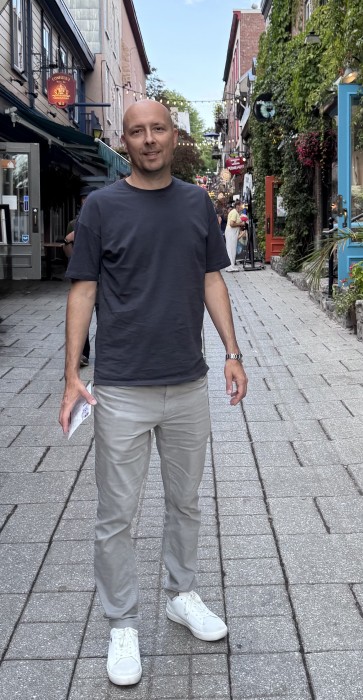
Memory, fatherhood and a life devoted to reading. They’re topics close to the heart of Kwantlen Polytechnic University (KPU) instructor Dr. Gavin Paul.
All are found in his new book — along with birds.
“There are a lot of birds that pop up. I’m also grappling with some things that make me anxious: the ongoing climate crisis, the weirdness of modern technology, my own mortality.”
Growing Old in the Anthropocene is a collection of 15 personal essays and is the fourth book for Paul, a Faculty of Arts English instructor at KPU. In it, he hunts for “glimmers of hope and beauty.” That’s where the birds come in. In one chapter, Paul writes about feeding crows and the bond that forms between them.
“Writing that piece helped me understand why I was doing this weird, slightly embarrassing thing. When I wrote the ending I felt like I had learned something new about myself,” he says.
“So there’s some sadness and seriousness in there, but I felt mostly hopeful writing the book and I feel hopeful rereading it.”
Paul wrote the essays over the past five years. “Memories of the Future,” the first chapter in the book, reflects on the height of the Covid-19 lockdown.
“That was such a strange, surreal time. During quarantine I discovered a livestream of an owl’s nest and became mildly obsessed with it and the sense of calm it brought to me. So that first chapter sets the table in terms of using the essays to explore my own thoughts and feelings and engage with the weirdness of living in the 21st century.”
The title chapter relates to mysterious health problems Paul experienced that coincided with a spike in awareness of the climate crisis.
“As I’m always telling students, writing is a means for understanding yourself and your place in the world. That’s what the central essay ends up doing: trying to make sense of what is happening in my own mind and body and also make sense of the world around me.”
Giving the book a title that no one can confidently pronounce is “likely a marketing disaster,” says Paul, but the title is deliberate. “Anthropocene” refers to our current geological age, the one in which human activity is the dominant force shaping the climate and the environment.
“Growing old is a very familiar phrase that we can all relate to, while Anthropocene is a word and concept that might still sound alien to many of us. That tension between the familiar and unfamiliar, the known and the unknown, the comfortable and the frightening, is at the heart of the book.”
Growing Old in the Anthropocene follows two other self-published books from Paul: The Coward, another collection of personal essays, and Conspiracy of One, a collection of short stories. Paul’s first book, the academic monograph Shakespeare and the Imprints of Performance, keys on his research interests of Shakespeare and the study of drama.
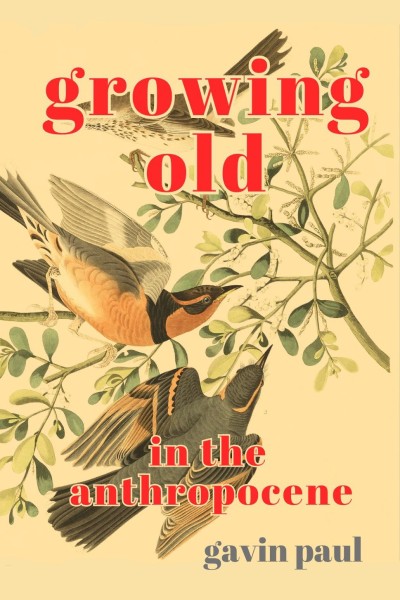
His experience in the process of publishing a book — that it’s so much more than just sitting down to write — is something he tries to impart to students. He also shares with students how writing is a powerful vehicle for self-discovery. Trying to recapture childhood memories, and put thoughts, feelings and dreams into words in Growing Old in the Anthropocene, says Paul, is at some level the author trying to record things that have otherwise left no record behind.
“The magical thing about writing is that once you start to look inward, sometimes all sorts of other emotions and memories that you weren’t necessarily looking for start to come trickling back. I think your mind and body hold on to most everything that happens to you. Writing is a tool that can help you locate and clutch — however briefly — a few lost scraps in the archive of your personhood.”


