Beekeepers across B.C. are testing their hives for a highly infectious disease that if left untreated, can destroy honeybee colonies.
Researchers at the Applied Genomics Centre supported by Genome BC (AGC) at Kwantlen Polytechnic University (KPU) are working with Dr. Fahim Raza, a researcher from BC Tech Transfer Program, BC Honey Producers Association, to find a way to combat American foulbrood disease (AFB).
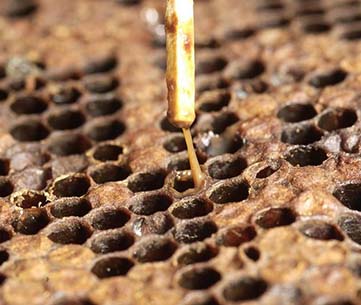
“This study is the first of its kind in B.C., which is primarily focusing on bacterial brood disease, AFB,” says Raza. “It’s caused by a spore forming bacterium Paenibacillus larvae that infects honeybee broods and ultimately destroys hives.”
Raza is collecting pooled, extracted honey samples from hives across B.C. to test them for AFB in the AGC.
“We will take DNA from positive samples and do a molecular test like the one used for identifying COVID, so we will be using a similar technique to identify the bacteria,” says Dr. Paul Adams, Director at the AGC.
According to Adams the disease is affecting many hives but researchers still don’t know how prevalent it is.
“There are five versions of this bacteria, some are really bad and some aren’t so bad so with the test we’ll be doing with genetics, we’ll be able to understand the distribution across B.C.,” says Adams.
While this disease has been an ongoing problem, both Raza and Adams hope this research can help them understand the disease and find a way to combat it.
“Beekeepers from across the province are enthusiastic about this AFB diagnostic initiative and want to know the spore counts in their apiaries,” says Raza.
Researchers hope to have answers on this disease within the next six months.


