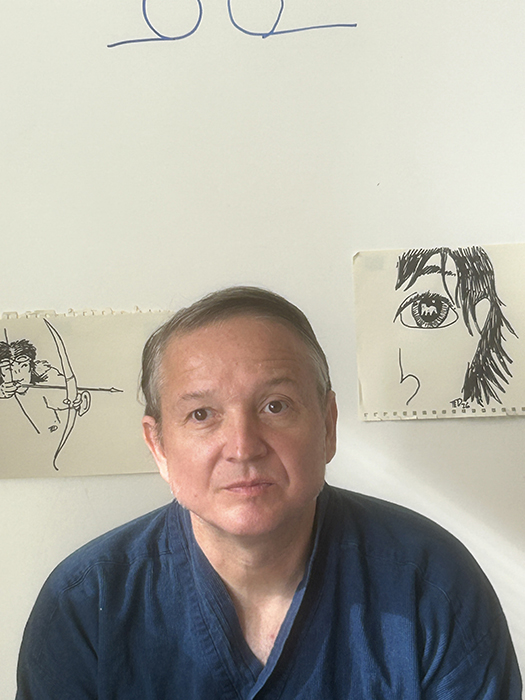
Indigenous artist, writer, game designer and scholar Théodore Bonnah will spend the coming months advancing an Inuit-inspired roleplaying game while sharing his creative practice with the Kwantlen Polytechnic University (KPU) community.
Also known as Tedankhamen, the NunatuKavut artist is the new Indigenous Artist in Residence in the Faculty of Arts at KPU.
“I am looking forward to collaborating with people sharing the same vision,” he says. “People either split themselves into traditional art or Indigenous or games, and I like the way KPU goes beyond these boundaries. It will be a fun residency.”
Bonnah brings a multidisciplinary creative practice shaped by his upbringing in Labrador, Newfoundland and Quebec, as well as more than two decades spent living in Japan. With artistic roots that trace back to Inuit painter Phyllis Pritchard and Labrador elder Jean Crane, his work explores storytelling, community and cultural connection.
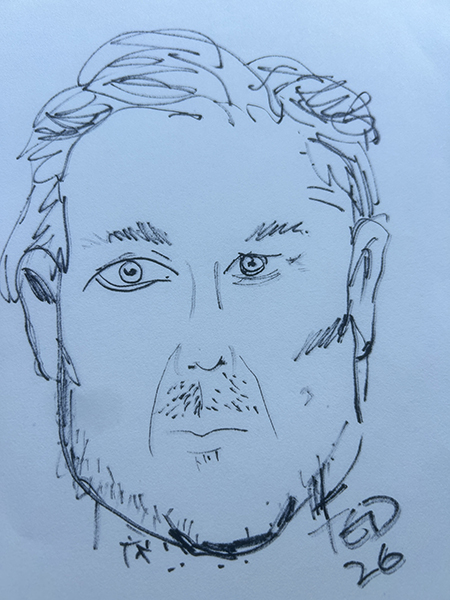
“I am an illustrator and pop artist, as I prefer pen and ink after my years in Japan, where I participated in manga circles and contributed illustrations to small teacher publications. I learned sketching and oil painting from my grandmother, Labrador painter Phyllis Pritchard, but I am now inspired by pop artists who are turning industrial or marketing styles and materials into art.”
KPU's Indigenous Artist in Residence program supports Indigenous knowledge, creative practice and community engagement, providing opportunities for residents to advance their own projects while connecting with students, faculty and staff through workshops, guest lectures, consultations and other activities.
During his residency, Bonnah will focus on publishing NUNA (The Land), an award-winning tabletop roleplaying game (RPG) inspired by Inuit culture and decolonial storytelling.
“I want to get the full version of NUNA out on Kickstarter and published during my first term, then turn to my art series and my second RPG about the constraints of living in Japan's vertical society. I have also pitched a series of workshops and would love to share my experiences and insights with faculty and students. I also want to run a few RPGs on campus,” he says.
Inspiration for NUNA emerged after Bonnah returned to Canada in 2023. He was encouraged to hear land acknowledgements and agreements with Indigenous groups happening across the country, but he also witnessed ongoing debates around identity, belonging and recognition within Indigenous communities.
At the same time, Bonnah discovered Coyote & Crow, an Indigenous-created roleplaying game that imagines an alternate future where colonization never happened. The game’s vision, combined with his own experiences and research, led him to create NUNA.
“It’s a celebration of Labrador Inuit identity in a post-capitalist future where Inuit ways of knowing were essential to survival,” he says. “NUNA is my love letter to the Labrador Inuit, and I hope that students realize how difficult it is having an Indigenous identity in modern Canada, with its shifting priorities and internal disputes, but that we should always look at our identity with pride and hope.”
Bonnah's creative work spans multiple disciplines. His most recent novel, Heisei Ghosts, explores contemporary Japan through stories of spirits who refuse to pass away quietly. A former university instructor and professor in Japan, Bonnah holds a PhD in Global Society Studies.


