A pair of Kwantlen Polytechnic University (KPU) psychology instructors who’ve probed youth violence and gangs for over a decade are putting their research into action.

Dr. Gira Bhatt has summarized years of research conducted with colleague Dr. Roger Tweed into a new resource to aid community outreach organizations and agencies.
The booklet, Prevention of Youth Violence and Gang Violence: From Research to Practice, explains findings of numerous academic studies and breaks down strategies to help community agencies continue the development of programs and action plans for violence prevention and youth well-being.
“We want to take our research out into the community, which may result in action,” says Bhatt, who completed the booklet after being granted educational leave for the project. “Academic research, when put into practice, which empowers the community, that’s the way forward for us.”
Bhatt, along with her collaborative research team, launched a three-part research project in 2008, focused on preventing youth from entering gangs. Eight academic researchers were involved — from KPU, Simon Fraser University, Langara College and University of Victoria — along with 11 community agencies. A key long-term goal of the project was to share results and learnings.
“Gang violence is not an issue of one group. It’s not for parents alone to handle, it’s not for teachers alone to handle, it’s not for policy makers, not for the police. We all must come together, sit at the same table, and talk,” says Bhatt.
Funded by the Social Sciences and Humanities Research Council (SSHRC), Bhatt led a series of studies from 2008 to 2015.
As part of the research, high school students, teachers and parents were surveyed. The research showed that children benefit from a strong sense of gratitude and forgiveness, a high level of trust in the goodness of people and a belief in being true to oneself. Such virtues can help prevent children from taking part in violent activities.

The research also showed that youth who joined gangs are not necessarily from impoverished or dysfunctional families, or part of an ethnic minority. Rather, the attraction to gang life often lies in the false belief of making lots of money, fast.
To continue with the goal of research-to-community action, Bhatt received funding from the B.C. Civil Forfeiture Grant Program, which allowed for a decade of community training on prevention of youth violence. Bhatt and Tweed offered workshops to encourage youth to make good choices and build character strengths. Their research found that focusing on strengths, not deficits or problems, can help shield youth from negative social influences.
“We believe that not all crime prevention has to be built on fear,” says Tweed. “Crime prevention can focus on building strengths in youth, so they can live satisfying lives.”
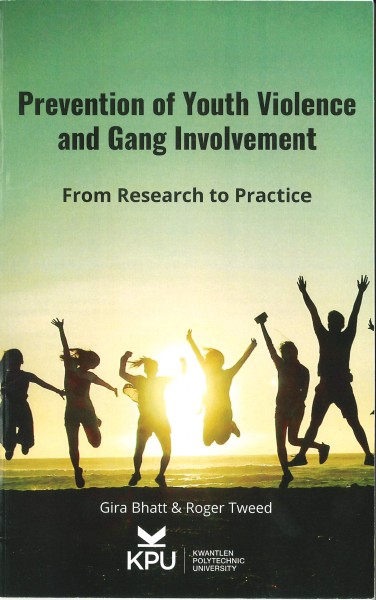
Bhatt says the work was fulfilling, while noting there is still a long way to go in preventing youth from entering a life of violence, crime and gangs. Offering hope is the resilience she sees in youth and the collective efforts of a community to make positive change.
“I certainly see the impact of people willing to work together, to collaborate in creating resources, and making action plans based on research. That’s been a very important impact.”
Some of that positive impact can be seen in the community among parents — with a greater understanding of recognizing signs of trouble — and a growing willingness to work with police.
“Parents are now reaching out. We’ve opened these channels for them.”
Researchers hope the booklet will help all who are committed to youth well-being: parents, families, teachers, police, policy-makers and youth program managers.
“It's been rewarding to see how eager community members are for research evidence on what can help youth in our community,” says Tweed.


