Jane Austen Day is Dec. 16 and this year fans of the celebrated English novelist are celebrating the 250th anniversary of her birth.
For Dr. Lindsey Seatter, an English instructor at Kwantlen Polytechnic University (KPU), Austen’s enduring popularity has much to do with how the writer connects with readers — writing stories about real people who have relatively ordinary experiences. Austen is known for six novels including Pride and Prejudice, one of the most popular novels in English literature.
As an undergraduate tasked with reading Austen’s fiction, Seatter was captivated by the writer’s innovative style, storytelling sincerity and humour. Seatter later wrote her dissertation on Austen and the evolution of her narrative style.
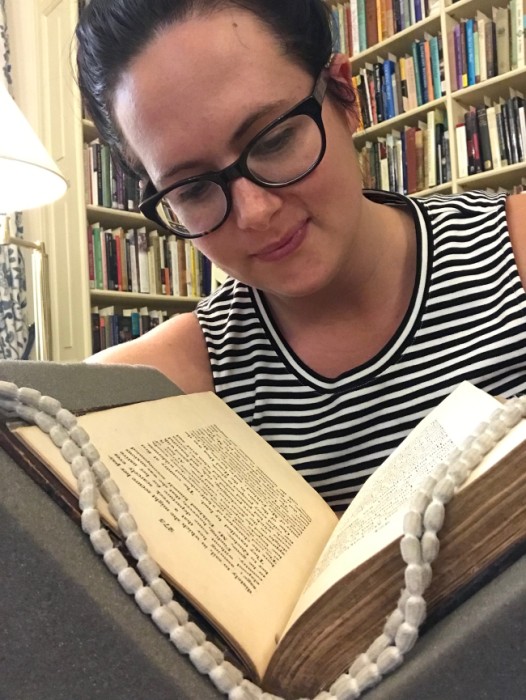
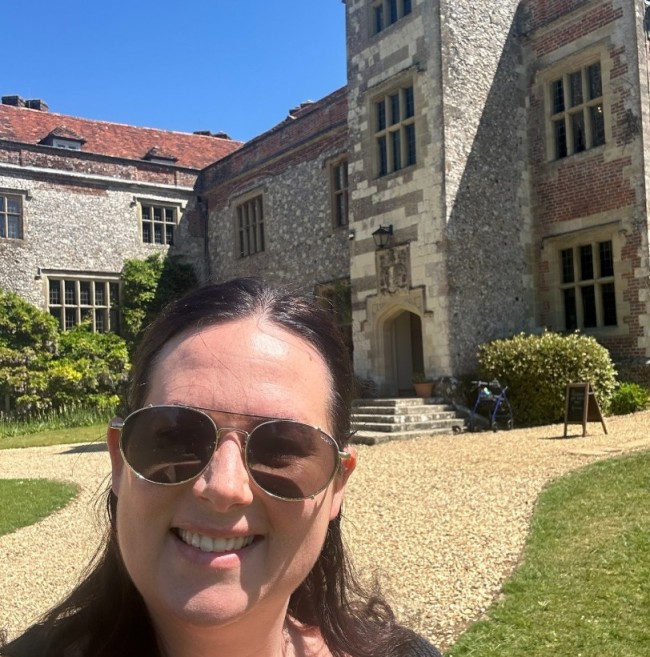
Seatter’s study of Austen has since taken her around the world, presenting at conferences across North America, working in archives in the United Kingdom and participating in a month-long research fellowship at Chawton House Library — a study centre of early women’s writing, located in the house previously owned by Austen’s brother. During the fellowship, Seatter lived in the renovated stable building on the Chawton property and worked in the reading room upstairs in the manor house.
Seatter’s scholarship on Austen also brought her to the classrooms at KPU, where she loves to read Austen alongside her students. Next semester she’ll be teaching a new course, ENGL 3329, focused entirely on Austen, her works and her cultural impact. The course will concentrate on the four texts that Austen imagined and drafted while in residence at Chawton Cottage.
Why are you interested in Jane Austen?
I remain fascinated by Austen’s role in shaping the rise of the modern novel. Her authorial career aligns almost exactly with the rise of the novel as a genre. We could see these parallel trajectories as mere coincidence, but I think something much more intriguing happened. I see a symbiotic relationship between Austen and the novel: they grow, change, morph and evolve alongside one another and they both need each other. Together, they changed the role of literature in culture by bringing the novel to the fore.
What gives Jane Austen staying power?
An 1818 review said the following about Austen’s final two novels: “She seems to be describing such people as meet together every night, in every respectable house in London; and to relate such incidents as have probably happened, one time or another, to half the families in the United Kingdom.” I think this quotation grabs hold of why Austen has remained so relevant: she writes stories about real people who have relatively ordinary experiences.
People can see themselves reflected in these novels and can identify with the heroines as they navigate the struggles of daily life: finding true friends, falling in love, battling betrayal, facing failure, misunderstanding and miscommunicating, and growing older. To see oneself reflected back is a profound and deeply connecting experience. Somehow, Austen has been able to achieve that across times, places, and cultures. It has earned her an enduring place in the literary canon and in the hearts of her readers.
What’s something you learned at Chawton House?
On my first visit to Chawton I remember being struck by the landscape. Austen’s heroines are often roaming in nature. Famously, Elizabeth Bennet arrives at Mr. Bingley’s house with a dirty petticoat — much to the shock and horror of Caroline Bingley. But the forest of southwestern England and the forest of the West Coast Canada are very different. Walking through the woods and the pastures in Chawton gave me a new understanding of the novels and their characters.
How much of a presence does Jane Austen have in Chawton today?
Chawton is synonymous with Austen. Chawton is a very tiny town, home to under 500 residents, but it entertains masses of visitors each year who want to explore Austen’s beloved home. All over the town you will see placards noting persons, places and events related to Austen, her novels and her life. The town does a wonderful job of paying homage to the author and allowing visitors to see her from a variety of perspectives. Chawton Cottage stages wonderful exhibits for people of all ages, Chawton House Library opens its doors to visitors while showcasing their amazing archival holdings, and the local teahouse has even taken Austen’s sister’s name as its moniker: Cassandra’s.
What can students learn by studying Jane Austen’s novels?
Oh, there is so much to glean from these texts. Of course, students can learn about narrative style, character development, and the impact of literary devices through close analysis of the novels. These are rich and robust texts that beg for rereading.
Beyond that, students can learn about the social, economic and political contexts that encapsulate the texts — how they relate to the rise in literacy, how they relate to the boom of industry, how they relate to the traumas of colonialism and how they relate to the seeds of feminist thinking.
In our digital age, studying Austen also means opening the doors to engaging with literary manuscripts and media adaptations. We have access to exceptional archival materials related to Austen’s works, which gives us the opportunity to examine her writing process. And, we can view incredible TV and film adaptations of all her novels, all of which pull — in fascinating and thoughtful ways — on particular threads that we observe in Austen’s writing.
What would Jane Austen say about the world today?
Above all else, Austen was a keen and shrewd observer of society. She knew how to read people and then how to translate that understanding into the dynamic characters who propel her novels. No one was spared from her witty prose, so one can only imagine the cheeky, cutting remarks she might have to say about the latest news headlines or celebrity gossip.
I also believe she was an optimist — a realist, but an optimist. I think she would have great faith in the younger generation. Her novels all hinged on young protagonists, late teens to late 20s, discovering themselves and their place in the world. Her heroines all find satisfaction and resolve in the final pages of her novels, and I think she would imagine the same for the young people in our world today.
KPU’s English Department provides undergraduate courses in a supportive learning environment. Students interested in pursuing a degree in English have four options: Associate of Arts Degree in English; Bachelor of Arts, Minor in English; Bachelor of Arts, Major in English; and Bachelor of Arts (Honours), Major in English.


