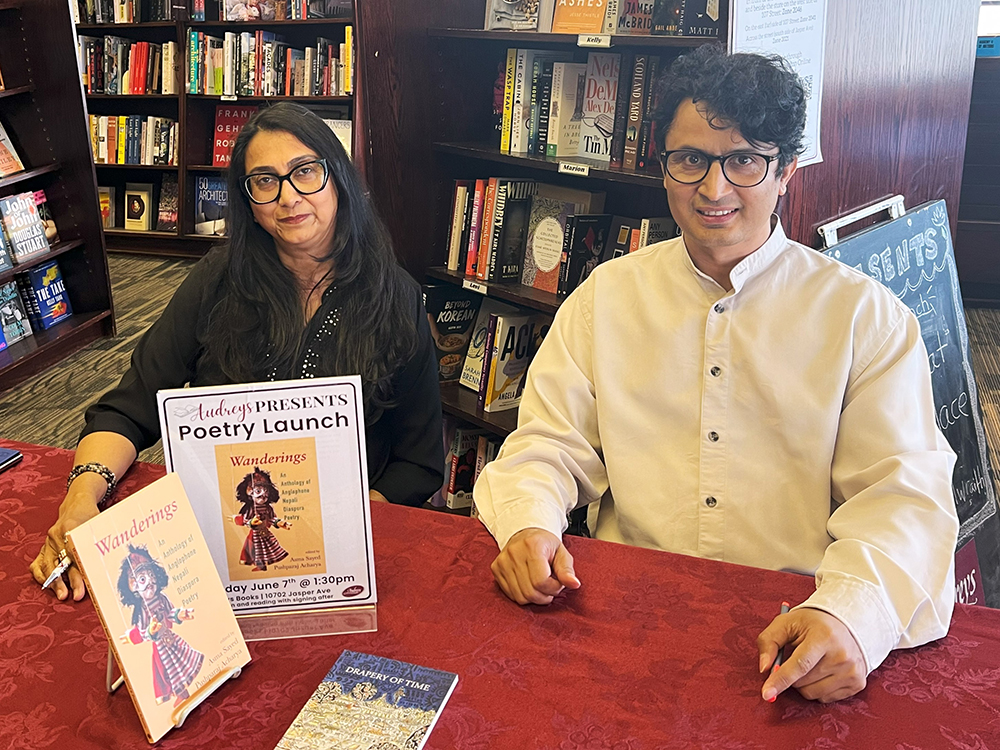
A new book from Kwantlen Polytechnic University (KPU) scholars is charting a new narrative for some overlooked authors in Canadian literature.
The Hazy Himalayas: A Short Introduction to Canadian Writers of Nepali, Bhutanese, and Tibetan Descent highlights the multilingual writing of Himalayan writers in Canada and their contributions to contemporary literature. Written by Dr. Asma Sayed and Dr. Pushpa Raj Acharya, the open access book wades into largely uncharted territory.
"While there have been some scattered attempts to write about the Himalayan writers’ contributions in Canada, this volume is the first to bring them together and offer a nuanced way of looking at writers from the South Asian region," says Sayed, Canada Research Chair in South Asian Literary and Cultural Studies in the Faculty of Arts at KPU.
The Hazy Himalayas began in 2023 as an effort to document writers from Nepal in Canada. That focus, Sayed and Acharya realized, was too narrow, and the project expanded to include a wider group of authors from the mountainous Himalayan region, which stretches across parts of Bhutan, Tibet, India and Nepal.
The book includes profiles of 25 writers whose literary paths vary widely — from poets, novelists, essayists and journalists, to photographers, critics and community organizers — and have often gone unrecognized.
The "haze" in the title suggests a feeling of distance and blurred connection to the Himalayas for writers living in Canada. Even though they are far away, the mountains remain alive in their memories.
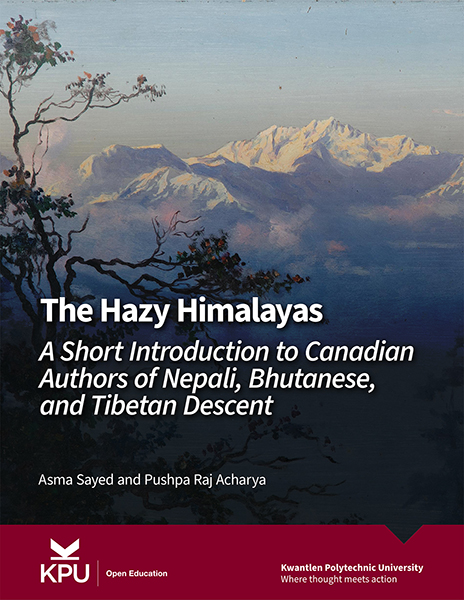
This haze also shows a contradiction.
"Although the Himalayas are among the most visible landscapes in the world — high, snow-covered and monumental — the writers connected to them have often remained unseen within Canadian literary space," says Sayed. "Canada, too, becomes a prism. The mountains here remind writers of mountains elsewhere. They bring nearness and distance into the same view."
The Hazy Himalayas builds on Sayed’s research on Canadian literature in heritage languages and how the literary canon is formed. Sayed points out that Canada’s official bilingualism creates a hierarchy, giving English and French more authority while treating other languages as the "other." Sayed argues that limiting Canadian literature to only English and French works is too restrictive in a multilingual nation.
"This book really grows out of that idea. It asks us to look more broadly at what counts as Canadian literature by recognizing Himalayan writing in Canada, whether it’s in English or in heritage languages, as an important and meaningful part of the literary landscape."
Not only does the book offer readers an entry point into an understudied body of work, it also shows that literary life is sustained not only through books.
"The field of Himalayan studies is dynamic, with new writers, publications and initiatives constantly emerging. In future editions, we plan to add profiles and expand formats to interviews or reflections," says Acharya, a Postdoctoral Fellow in South Asian Studies working with Sayed at KPU. "We hope these entries inspire readers to learn more about the writers featured and to further explore the diversity of voices in Canadian and global literatures."
The Hazy Himalayas, supported by the Canada Research Chair Program and the Social Sciences and Humanities Research Council, is a free, digital book available online through Pressbooks.


