Story at a Glance
KPU researcher to develop a bog restoration and management plan for Richmond’s Garden City Lands
Research will explore invasive species, mowing regimes, native berries
Techniques will be explored to restore sphagnum moss — key to pulling carbon from atmosphere
Findings will inform local decisions on conservation while creating research opportunities for students
Countless people pass by it every day, unaware that beneath its open fields lies a remnant bog that’s been pulling carbon from the atmosphere for thousands of years.
This is the Garden City Lands in Richmond, a 55.2-hectare (136.5-acre) urban peatbog where Dr. Michael Bomford will spend the next year researching this wetland-based ally against climate change.
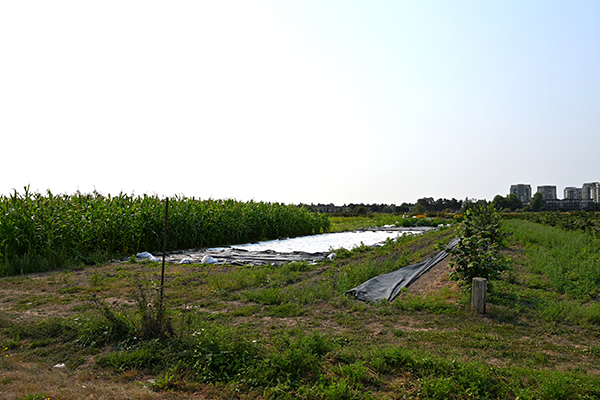
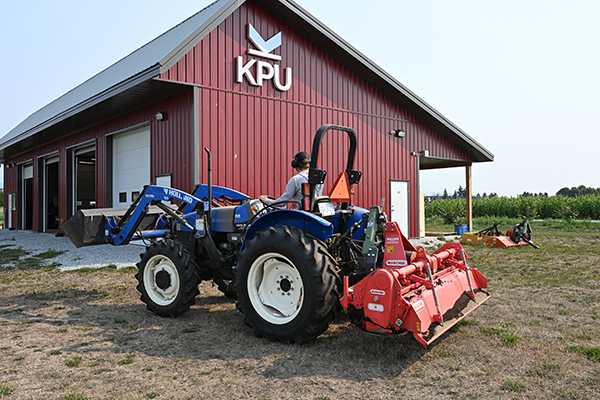
Adjacent to Kwantlen Polytechnic University’s (KPU) Richmond campus and home to the KPU Farm, this city-owned property is where the university’s Sustainable Agriculture students get their hands dirty and where Bomford will take a leave from teaching to go knee-deep in research. His goal: create a plan to restore and manage bogs in a way that protects biodiversity, supports Indigenous traditions and reduces greenhouse gas emissions.
Findings will help guide local decisions about how peatlands are managed and restored. In the long term, his work aims to strengthen KPU’s Sustainable Agriculture program by creating new opportunities for students to take part in research and gain hands-on learning experience at KPU Farm.
“Over the next year I’ll be setting up experiments to learn from the bog. But an equally important part is building relationships — connecting with people who are managing bogs elsewhere. There are also people working with Indigenous communities who have managed bogs for millennia. These are people who know a lot about bog ecosystems in this region. I want to connect with them and learn from them, while also learning directly from the bog itself,” says Bomford.
An instructor in the Sustainable Agriculture program since 2014, Bomford grew up the son of an agriculturalist among the expansive grain farms of B.C.'s Peace River region and earned degrees in plant science and agricultural pest management at University of B.C. and Simon Fraser University. He later completed his PhD at West Virginia University, conducting companion planting research on a newly-certified organic farm.
Coming to KPU Richmond inspired his more recent research passion.
“Bogs and wetlands have become a central focus of my research, but only relatively recently. I knew nothing about bogs when I moved to Richmond about 12 years ago. This interest really grew from being in a wetland environment and learning about it,” he says.
Bomford believes bogs play an important role that’s often overlooked.
“As we know, increasing atmospheric carbon dioxide contributes to global warming and climate change. One way of reducing that is by storing more carbon in terrestrial ecosystems — and bogs do a tremendous job of that. They pull carbon out of the atmosphere and store it underground for thousands of years.”
Bogs cover about three per cent of the Earth’s surface but store approximately 30 per cent of terrestrial carbon, he notes.
“There’s actually more carbon stored in an acre of bog than in an acre of old-growth rainforest. If we had a massive old-growth forest in urban Richmond, people would be eager to preserve it. I would argue it’s even more important to conserve this remnant of bog land in an urban setting.”
Canadians in general should be especially aware of bogs, because we have so many of them. About 25 per cent of the world’s bogs are in Canada. While Russia may have the largest total area of peatlands globally, Canada’s peat is deeper and stores more carbon overall.
“When these bogs function properly, they remove enormous amounts of carbon from the atmosphere. In fact, some estimates suggest that the carbon uptake from Canada’s bogs is comparable to the carbon emissions from all vehicles in the country.”
In the coming year, Bomford will develop a Garden City Lands bog management plan for the City of Richmond. A key part of that is restoring sphagnum moss, which is essential for forming peat. Since most bogs are made of peat, encouraging sphagnum growth is key to pulling carbon from the atmosphere and storing it long-term.
Another goal is promoting native species, especially berries like velvetleaf blueberry, bog bilberry, and cloudberry. These are abundant but threatened by invasive species, including cultivated highbush blueberry and European birch, which can dry out the bog. There’s also Scotch heather, an introduced species that significantly alters the ecosystem.
“Historically, this land was used by Indigenous peoples for harvesting berries and medicinal plants. I’d like to restore that productivity — not by planting new species, but by encouraging existing plants to fruit more effectively.”
One issue he’ll tackle is mowing. The land is mowed annually to control invasive species, but this can inhibit sphagnum growth and prevent berry production, since many plants fruit on second- or third-year growth. So Bomford is experimenting with different mowing schedules, such as leaving some areas alone or mowing less frequently.
Another key challenge with is the land’s former use as a firing range between 1903 and 1928, requiring soil testing to ensure harvested berries are safe.
Sustainable Agriculture students have long been involved in research projects in the bog, and they’ll continue to contribute to experiments at different stages of Bomford’s project. The program also offers an honours research course in which students design and complete a research project within a year, so there will also be opportunities for shorter-term studies on the Garden City Lands.
A bog ecosystem within an urban environment is truly unique and stands in contrast to Europe, where many bogs have been drained for agriculture and development, Bomford says.
“Burns Bog in Delta is the largest nearby, but it's mostly inaccessible to the public. The Garden City Lands on the other hand offer lots of opportunities for public engagement. Helping people interact with this bog can build appreciation, not just for this site, but for the vast bog ecosystems across Canada that play a significant role in mitigating climate change.”
Bomford would like to see greater public access at the Garden City Lands, possibly through boardwalks, so people can experience the bog without damaging it. Meanwhile, he continues to connect people with the land through tours, talks and outreach.
“I’m hoping to do more of that to spread awareness about bogs and why they matter,” he says. “Sharing this work is the whole point — raising awareness and helping people understand the importance of bog ecosystems.”


