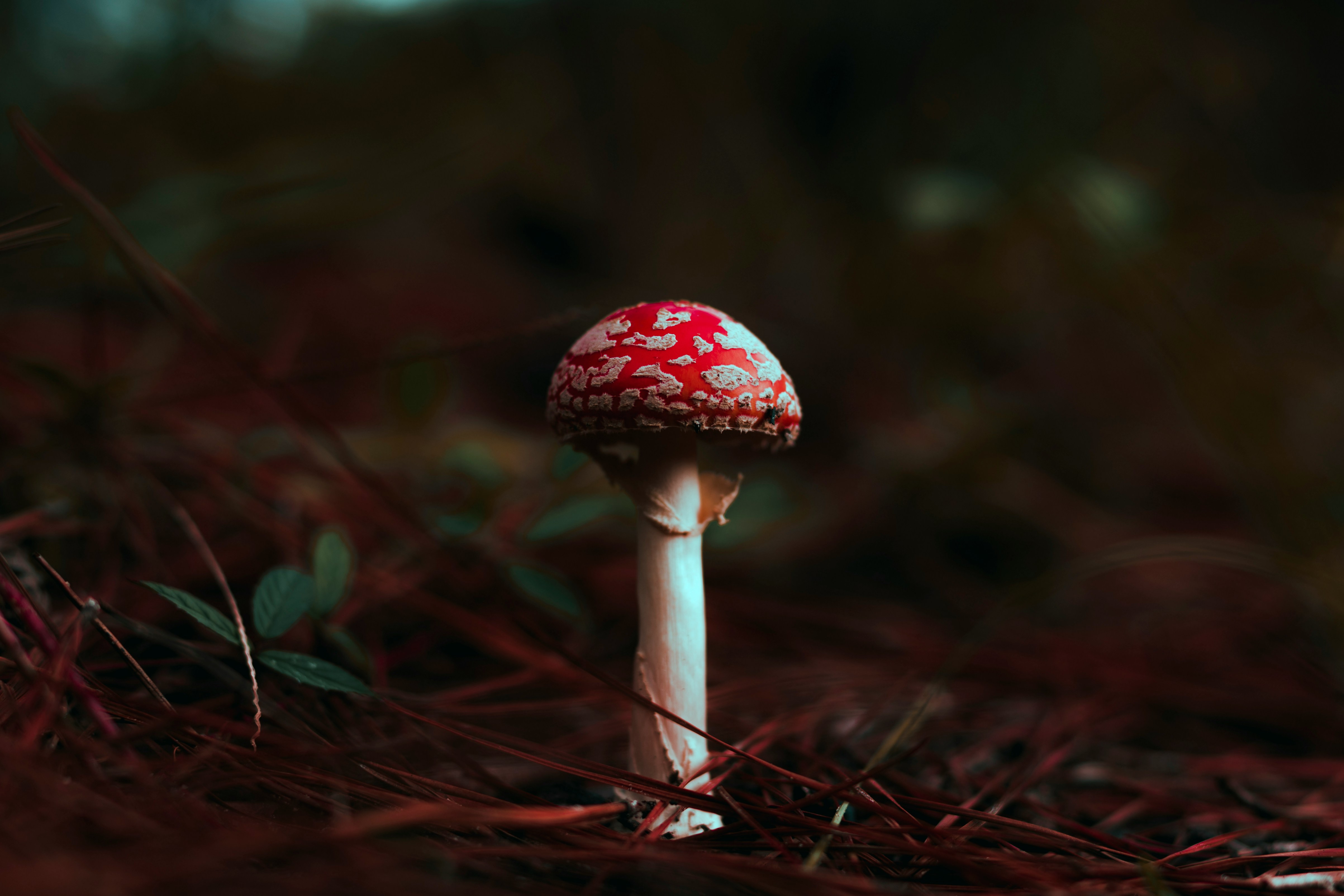
Discover the fascinating world of fungi and their remarkable contributions to nature, food, and medicine. In this hands-on introductory course, you'll explore the biology of mushrooms and other fungi, learn how they support healthy ecosystems, and examine their historical and modern uses in food and medicine.
You'll gain the knowledge needed to identify several common local mushrooms, understand the differences between edible and poisonous species, and learn the fundamentals of mushroom cultivation. By the end of the course, you'll have the skills and confidence to grow your own oyster mushrooms at home, from inoculation through to harvest.
No prior experience is required.
What You Will Learn
By the end of this course, you will be able to:
- Explain what fungi are, how they are related, and describe their roles in nature, food production, and medicine.
- Identify several common local mushroom species and distinguish between well-known edible and poisonous mushrooms.
- Understand the mushroom life cycle and the principles of sterile technique used in cultivation.
- Grow oyster mushrooms from inoculum to spawn and ultimately to fruiting bodies.
- Develop a greater appreciation for the diversity and ecological importance of fungi.
Who This Course is for
This course is open to everyone and welcomes learners of all experience levels, whether you are:
- Curious about the natural world
- Interested in mushroom foraging and cultivation
- Exploring the role of fungi in food and medicine
- A gardener, hobbyist, or aspiring grower
- Simply looking to learn something new
Course Format
Dates: Nov. 13-27, 2026
Course Hours: Fridays 6-9 PM
Delivery: In person at KPU Richmond; three evening classes
Classes combine instructor-led learning with hands-on activities and demonstrations, including practical experience growing oyster mushrooms.
A certificate of completion will be provided to participants who successfully finish the course.
Continue Your Learning
Introduction to Mycology: The Science of Fungal Identification builds on this course with mushroom identification techniques, microscopy, spore prints, and a guided field experience.
Instructor Bio — Emily Betz, MSc

Emily has a passion for the weird and wonderful organisms that are often overlooked despite their important roles in the natural world. She earned her BSc working in a mycology lab, where she developed DNA extraction techniques for chytrid fungi (water molds). During her Master of Science (MSc) in Biology, she studied plant pathogens, specializing in fungal diseases.
Emily’s expertise spans fungi, plants, algae, and microbes, and she has extensive experience teaching laboratory courses in these areas. She is also highly skilled in molecular biology techniques and frequently teaches genetics labs. Enthusiastic about sharing her fascination with biology, Emily enjoys helping students discover and appreciate the diversity and complexity of life, especially the organisms that are too often overlooked.