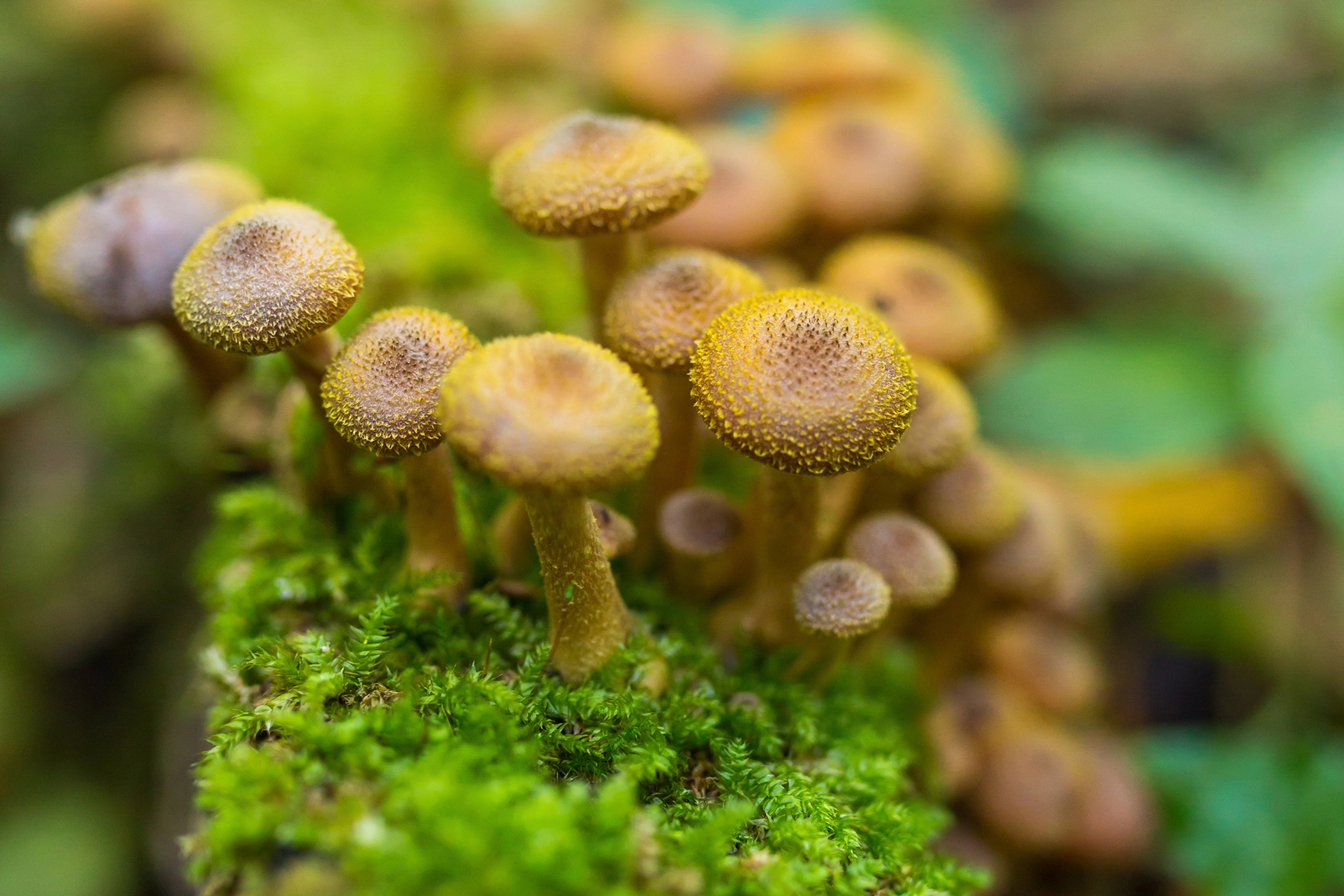
Learn how mycologists identify mushrooms in the laboratory and in the field. In this hands-on introductory course, you'll explore the biology and diversity of fungi, discover the features used to distinguish different species, and gain practical experience with common identification tools.
No prior experience is required.
What You Will Learn
By the end of this course, you will be able to:
- Identify several common local mushrooms and compare well-known edible and poisonous species.
- Use a microscope to compare fungal spore types and understand how spores relate to fungal classification and evolutionary relationships.
- Create and interpret spore prints from different mushroom species.
- Use identification keys to justify mushroom identifications based on observable characteristics, including spore colour.
- Develop practical field and laboratory skills used in fungal identification.
Who This Course is for
This course is open to everyone and welcomes learners of all experience levels. It provides an accessible introduction to fungal identification and biology, whether you are:
- Curious about mushrooms and the natural world
- Interested in learning how fungi are identified
- Exploring mushroom foraging as a hobby
- A gardener, naturalist, or outdoor enthusiast
- Interested in microscopy and hands-on scientific investigation
- Simply looking to learn something new
Course Format
Dates: Oct. 23-Nov. 7, 2026
Course Hours: Fridays 6-9 PM and Saturday 11 AM-2 PM
Delivery: In person
Classes combine instructor-led learning, hands-on laboratory activities, and practical identification exercises, including using microscopes, creating spore prints, working with identification keys, and applying these skills during a guided field trip in the final class.
A certificate of completion will be provided to participants who successfully finish the course.
Continue Your Learning
While no prior experience is required, learners interested in the practical applications of fungi may wish to begin with Introduction to Mycology: Food, Medicine & Cultivation before exploring the identification skills and field techniques covered in this course.
Instructor Bio — Emily Betz, MSc

Emily has a passion for the weird and wonderful organisms that are often overlooked despite their important roles in the natural world. She earned her BSc working in a mycology lab, where she developed DNA extraction techniques for chytrid fungi (water molds). During her Master of Science (MSc) in Biology, she studied plant pathogens, specializing in fungal diseases.
Emily’s expertise spans fungi, plants, algae, and microbes, and she has extensive experience teaching laboratory courses in these areas. She is also highly skilled in molecular biology techniques and frequently teaches genetics labs. Enthusiastic about sharing her fascination with biology, Emily enjoys helping students discover and appreciate the diversity and complexity of life, especially the organisms that are too often overlooked.