KPU welcomed its first Elder in Residence, Lekeyten of Kwantlen First Nation at a special installation ceremony on January 29, 2015.
Roles of an Elder-in-Residence
- Share Indigenous ways of knowing, being and doing through storytelling, cultural teachings and classroom presentations that enrich student learning and promote understanding of Indigenous knowledge systems and perspectives
- Foster a safe and welcoming space for Indigenous students to seek guidance, receive mentorship and deepen their cultural identity and sense of belonging.
- Refer students to counselling, advising, other student services units as appropriate.
- Open and/or close events with a Welcome, prayer, blessing and/or song.
- Participate in ceremonies, cultural gatherings, celebrations and university events
- Support learning opportunities for staff, faculty and administration that deepen understanding of Indigenous history, cultures and world views
Offer guidance on cultural protocols, practices, and respectful engagement with Indigenous Peoples and communities.
Note: The Elder-in-Residence role complements existing supports for students. Where additional support is needed, individuals are encouraged to connect with the appropriate professional resources available to students.
Biography
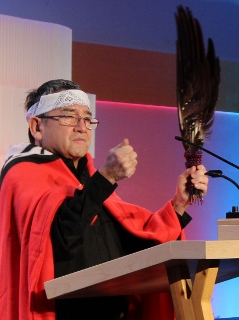
One of 20 Kwantlen First Nation Elders, Lekeyten grew up within a very large family in Chehalis First Nation near Harrison Lake. Here, Lekeyten attended day school. Similar to residential schools, day schools did not require students to stay overnight and they returned home at the end of every day. But the teachings were the same, said Lekeyten, and he and his classmates were taught to be quiet. As a result, Lekeyten spent more time in nature than in school, and he soon found his voice.
Fast-forward to adulthood, and Lekeyten has been avidly involved for more than 20 years as a guest speaker and presenter at all levels of elementary, secondary and post-secondary education as well as trades and conferences in the Lower Mainland. His talks are about the environment, land and water use, fishing, and issues of conservation and its traditional importance. Lekeyten is a proud father of three daughters and two sons. He is also extremely proud of being a grandfather of nine. Lekeyten and his wife Cheryl Gabriel have been together for forty years. He loves and respects his family wholeheartedly.
His advice at the Elder in Residence installation ceremony: “Never shut up.”
Lekeyten is honoured to be an Elder in Residence at KPU. He will share with the university, faculty, staff, and students the best of himself. He believes that every person deserves the best for their life and educational journey.
Installation Ceremony
KPU welcomed its first Elder in Residence at a special installation ceremony January 29, 2015. The installation included warm remarks from many who have known and worked alongside Lekeyten.
KPU President and Vice Chancellor Dr. Alan Davis described how all new students at KPU are greeted at the start of their studies at the university by Lekeyten, who has a history of welcoming every student and bringing with him a blessing. “It’s a moment they never forget, I’m sure.” KPU Chancellor Dr. George Melville, officiating at the installation, said he’s confident Lekeyten will bring the best of himself to his role as KPU’s first Elder in Residence.
Speaking for Lekeyten’s family, many of whom were present at the installation, Kwantlen First Nation Elder Kevin Kelly noted “today is a wonderful day.”
Installation Ceremony gallery -

Protocol Guidelines
- The Elder may choose to be called by a given first name or an ancestral name. Please ensure you ask them for their preference. In all cases, every effort must be made to ensure the correct and proper pronunciation of their first name or ancestral name.
- Cultural protocols may vary by Nation, community, or individual. When in doubt, ask respectfully. Please do not take photos or record without prior permission or share publicly.
- Designate a support person or host to be available throughout the event to assist the Elder as needed.
- Ensure the Elder is comfortably seated, preferably in the front row or aisle seat to ensure accessibility
- If food is served, inquire as to any dietary restrictions; offer to bring food to the Elder, or if they prefer to serve themselves, invite them to the front of the line
- Departments may choose to offer a thank-you gift as a gesture of appreciation when appropriate and in accordance with local protocols; Gift-giving, as appropriate, should complement, not replace, compensation.
Difference Between a Land Acknowledgement and a Traditional Welcome
Traditional welcomes are offered by a representative of the Nation on whose territory your event is taking place. These welcomes are an important cultural protocol and are typically delivered by an Elder, Knowledge Keeper, or designated speaker from that community.
Land acknowledgements, on the other hand, are usually given by individuals who are not members of the Nation whose land they are on. A land acknowledgement can be personal and meaningful—it may reflect your own relationship to the land, your experiences there, or express thanks to the people and ancestors who have cared for it since time immemorial.
Offering a land acknowledgement is a way of showing respect, gratitude, and awareness. It recognizes the enduring presence, stewardship, and contributions of Indigenous peoples, and acknowledges that the land you are on has been cared for over thousands of years.