
Room to Grow, Room to Focus
The Bachelor of Interior Design is a full-time, four-year degree, organized around six connected areas of learning: studio work, building technologies, design communication, site studies, professional practice, and liberal education electives. That adds up to a complete education in how spaces work.
Small class sizes mean you’re never just a face in a lecture hall. The KPU Wilson School of Design faculty will know your work and you’ll build meaningful relationships with the professional designers on our Advisory Committee.
Want to go further? The Bachelor of Interior Design (Honours) lets you spend your final year on a self-directed project of your own choosing. It’s the first program of its kind in Western Canada.
Program Highlights
- Our program has held CIDA accreditation since 2000. In fact, we were the first in B.C. to get it. In May 2026, we earned our fifth reaccreditation for the maximum six-year term, with zero areas of non-compliance found.
- Applications open October 1. Apply early, since seats fill up fast.
- As part of the program, you’ll take a mandatory Field School, typically in your third year, giving you the chance to study abroad and experience design in a completely different culture.
- You’ll log 80 hours of practical experience in a design or architecture firm (under the supervision of a Registered Interior Designer) before you graduate.
- Your degree meets the education requirement to sit the NCIDQ exam and pursue membership in IDIBC, IDC, and other professional associations.
- Already working in interior design? You may be able to earn credit for your experience through a Prior Learning Assessment (PLA).
- Transfer credits from another program or institution are assessed on an individual basis, so bring your coursework to the Office of the Registrar and they will help you sort through it.
- Most recent grads found work in the field within a month of finishing their degree. Another good stat: 100% of 2021 and 2023 grads surveyed were employed after graduating.
Want more detail? Check our FAQ if you still have questions.
Honours Program
Ready to go even further? The Bachelor of Interior Design (Honours) is one of only a handful of programs like it in Canada, and the only one west of Ontario. Here are the highlights:
- To pursue the Honours option, you’ll need to declare your intent by the end of year 3, with a minimum 3.3 CGPA in Studio 1, 2, 3, 4, 5, and 6, plus a minimum grade of C in all other required courses.
- The Honours degree requires 128 credits, four more than the standard Bachelor of Interior Design.
- Instead of a typical final year, you’ll spend semesters 7 and 8 on a self-directed Honours Project. It will be a topic of your own choosing, developed independently.
Costs and Equipment
Tuition and Fees
Use our Tuition Estimator to get a sense of costs. Keep in mind there are mandatory student fees and other fees on top of tuition.
Scholarships, student loans, and other financial aid may be available. Visit Student Awards and Financial Assistance to see what you might qualify for.
Materials and Supplies
You’ll need to pay a studio fee of about $200 per semester, which covers most of your materials and supplies.
Some courses may have extra costs — check with your instructor before buying anything. We subscribe to the Zero Textbook Cost program, so you’ll spend less on books than you might elsewhere.
Laptop
You’ll need a laptop with specific software to keep up with coursework.
A 64-bit Windows system is required. Mac users can use Parallels Desktop with at least 16GB of RAM.
Visit our Equipment & Software page for the full specs.
Field School
As part of your degree, you'll take a mandatory Field School (usually in your third year).
Costs vary by destination but they typically fall in this range: $3,500-$4,500.
This covers accommodation, local transportation, and museum or gallery entry fees.
Program Timeline
Year 1: Build your foundation
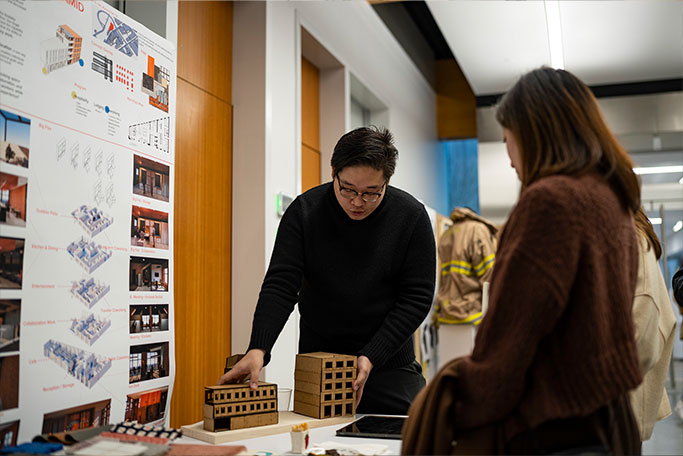
The studio work in our program mirrors a real design firm, with feedback, critique, teamwork, and mentorship encouraged. The studio is where you’ll develop the critical thinking and creative methods that carry through everything else you do here. You’ll also learn the fundamentals of building technologies and design communication, while developing the construction documentation skills you’ll rely on throughout the program.
Year 2: Deepen your craft
Take on more complex studio projects, dig into human factors and how people actually experience space, and start applying construction documentation at a more advanced level. Site Studies take you out of the classroom to measure, document, and learn from IRL spaces (in progress or completed) firsthand. This is also where you’ll understand where history meets the contemporary, and where global differences in design inform your decisions.
Year 3: Take it further
Continue building your studio and technical skills, then head abroad for your mandatory Field School. This is a chance to study design in a completely different culture. You’ll also complete a quantitative elective and start shaping your path with electives of your own choosing. Liberal Education electives increase your culture literacy and enable you to place your design practice in context.
Year 4: Launch your career
Spend your final year on advanced studio work, as well as business and professional practice courses that prepare you for life after graduation. Or, if you’ve declared Honours, dig into a self-directed Honours Project that lets you explore a topic of your own. Required Professional Work Experience puts your knowledge to the test in a design firm under a Registered Interior Designer.

Design & Communication
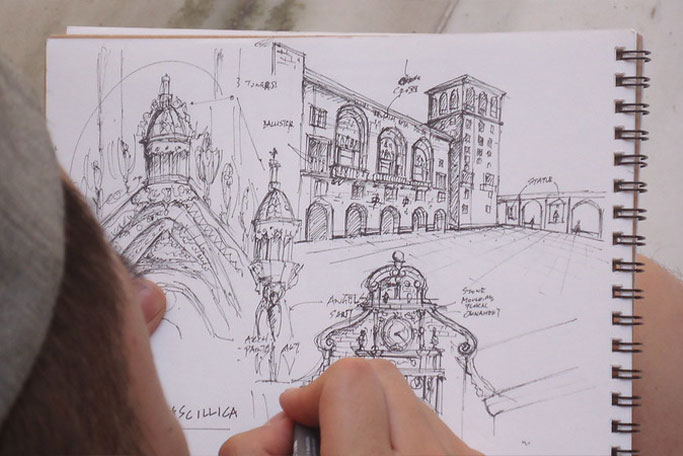
You’ll spend quality time in the studio, developing your own design process and learning to communicate ideas clearly, whether that’s a hand sketch, a digital drawing, or a conversation with a client.

Technical & Building Knowledge
You’ll learn the construction side of the job: building codes, structure, circulation, and the drafting and documentation skills that turn a concept into something buildable.

Research & Context
You’ll travel outside the classroom to study projects in progress, learning to observe, measure, and document spaces firsthand. This will give you an understanding of design history, global perspectives, and the materials shaping the field today.

Professional Practice
You’ll build the business and professional skills that come after graduation, rounded out by electives that broaden your perspective beyond design itself.
The Program is Demanding – Here’s What To Expect
Interior design is a demanding profession, and our program runs at the same pace. When you enter the program, you should expect to meet deadlines under pressure, work to high standards, and commit as many hours outside class as inside, and oftentimes more.
This intensity is what prepares you for the interior design industry. It also means most students find it hard to hold down a job while studying, especially if they’re working 8 hours or more in addition to their weekly coursework.
If finances are a concern, apply anyway. Our Interior Design Scholarships and resources on the KPU Student Awards Financial Assistance page can help make the program possible.
Look Behind The Scenes
For inspiration, browse our Interior Design feed or search @wilsondesignkpu on Instagram to see what our community is making right now.
Here’s what a real alum has to say about our accreditation:
"The CIDA reaccreditation confirms the rumour is true: KPU offers one of the best interior design programs in Canada! It takes a bold, committed and confident department to voluntarily put their curriculum up for review by an independent review panel. Given the majority of evidence analyzed by CIDA is previous student work, this reaccreditation also proves KPU successfully translates academic theory into applied design skills. Past performance is the best indicator of future achievements; I look forward to many more success stories. Many thanks to everyone in the KPU Interior Design department!"
- Taryn Chisholm, Alumni - Design Principal, West Acre - Victoria, B.C.
Ready To Get Started?
We’re looking for students with curiosity about spaces, an eye for detail, and the drive to master both the creative and technical sides of design. Sound like you? Time to take the next step.
To apply, you’ll need to meet our English Proficiency Requirement, submit an Entrance Package, and complete an interview. Get all the details here: